
The van den Heever Group

Convective Storms

Microphysics and Aerosols

Cold Pools

INCUS
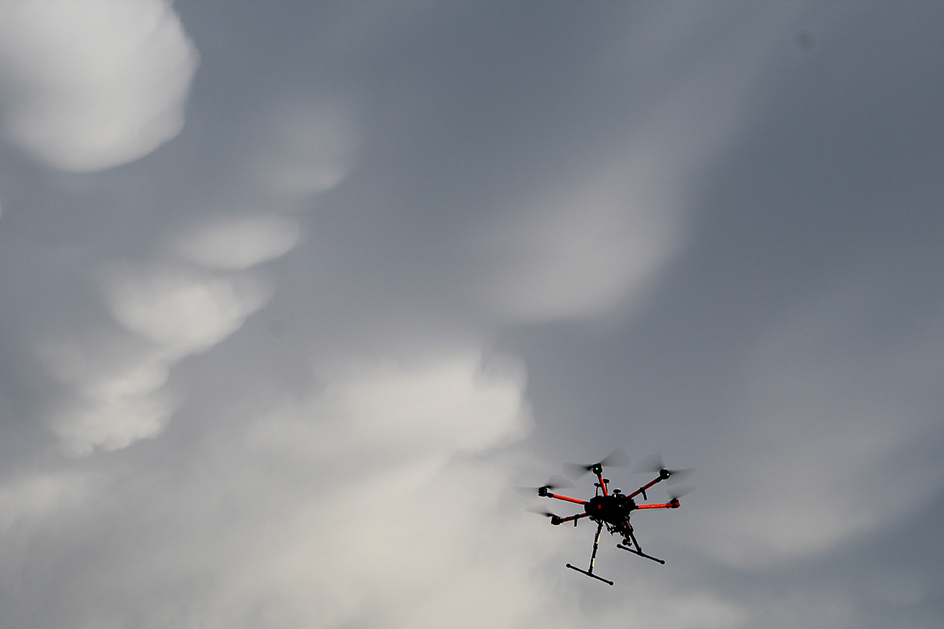
Drones

RAMS Model

tobac
Research News

Convective Environment Variability
IT led a Geophysical Research Letters paper analyzing the spatial variability of quantities such as temperature and moisture in convective environments. Near-surface variability is higher over land than over oceans, but the opposite is true for variability at 500 mb.

Cold Pools and Deforestation
Nick led a paper in Atmospheric Science Letters investigating the impacts of deforestation and cold pools on convection in the Amazon Rainforest. Deforestation creates regions devoid of rainfall, but cold pools act to reduce the size of such regions.

BioAerosols and Cold Pools
Members of the Stone, Kreidenweis, and van den Heever groups recently published key results from the BioAerosols and Convective Storms (BACS) field campaign in Environmental Science: Atmospheres. Cold pools were found to significantly increase the concentration of warm-temperature biological INPs.
Group News
2026
August 28: Research Scientist Brenda Dolan attended the 13th European Conference on Radar Meteorology and Hydrology in Belgrade, Serbia. Dr. Dolan presented a poster on the NSF Community Instrument Facility, Sea-Pol. She also presented on the calibration / validation efforts for the upcoming NASA INCUS mission.


August 27: Andrew and Christine both wind awards for their presentations at the 17th Conference on Cloud Physics held at the recent 2026 AMS Madison Summit. Andrew won a 2nd place poster presentation for his poster titled: "Where the Air in Tropical Updrafts Came From, How it Got There, and its Thermodynamic Implications." Christine got an honorable mention for her poster titled: "Transport of Aerosols by Cold Pool Trains." This was Christine's second Outstanding Student Presentation Award (OSPA) from the Madison meeting.
August 10: Christine wins the top poster presentation in the 32nd Severe Local Storms conference held last week during the 2026 AMS Madison Summit. Christine and co-authors won the award for their poster titled “Variability in Northern Colorado Cold Pool Thermodynamic Profiles as Observed by Drones.”
August 3: IT, Miles, Phoebe, Christine, Juliet, Rachael, Leah, Andrew, and Charles all attend the 2026 AMS Summit in Madison, WI.
July 27: Denver 9NEWS and CSU Source featured Brenda and Rachael and their work on the CORRIDOR project, a partnership between CSU and the Colorado Department of Transportation. CORRIDOR launches radiosondes from Fort Collins for operational and research purposes on days of interest for high travel impact weather. Learn more about CORRIDOR and see the soundings here!

May 20: Jennie wins an award from Letters to a Pre-Scientist (LPS) for outstanding outreach and mentorship in the program. Jennie was highlighted for “writing exceptionally engaging letters” and for encouraging a young scientist interested in meteorology to explore a future in STEM. Learn more about LPS here.
May 14: The CORRIDOR project begins with students from the van den Heever group launching a sounding. For more information about CORRIDOR, and to view all sounding data, visit the CORRIDOR Webpage.

May 7: The group is featured in two SOURCE articles about using drones in atmospheric science. Christine, Nick, and Leah talk about their work in this article about using drones to sample cold pools aboard the METEOR research vessel in the Atlantic Ocean. They also shared 10 interesting details about working with weather drones in a second article here.


May 7: Charles wins the Silva Dias Award for his exceptional research on bioaerosol transport in convective storms. The Silva Dias Award is bestowed on a senior Ph.D. student in the Department of Atmospheric Science for outstanding research. Congrats to Charles for his well-deserved award!


May 6: Steve wins the CSU College of Engineering Outstanding Researcher Award for pioneering advances in high-resolution atmospheric modeling, foundational contributions to the NASA INCUS mission, leadership of DoE model intercomparison initiatives, success in securing major NASA and DoE funding, and exceptional mentorship in advanced modeling. Congratulations, Steve!

May 4: Check out these amazing interviews of Sue by Colorado Public Radio, Colorado Matters, The World, and GBH. In these interviews, Sue talks about the recently released PBS NOVA episode Rain Bombs which features the van den Heever group's field work.
May 4: Jennie presents INCUS research at the European Geophysical Union (EGU) General Assembly in Vienna, Austria. Jennie gave a talk on the INCUS modeling efforts and also presented her work on ice aggregation in thunderstorm anvils.

April 16: Tune into PBS this Wednesday night (the 22nd) for Rain Bombs, a NOVA documentary featuring the van den Heever group's field work. See this SOURCE article for information on how to view the episode.
April 11: Brenda and Christine participate in April's Breakfast Fly-In for the Wings over the Rockies Exploration of Flight museum! They showcase drones and our innovative instrumentation strategy to aviation enthusiasts of all ages and discuss how drones, radars, and targeted airplane flights help us study high-impact weather phenomena such as cold pools, convective storms, and hurricanes.


April 8: Professor Kristen Rasmussen and Brenda were featured in a 9News story describing the INCUS mission and the ground-based data collection in Northern Colorado that was part of the TIME SLICE pre-launch field campaign. They talked about the mission and new radar techniques needed for validating INCUS in front of the backdrop of the CSU CHIVO radar, a key asset for INCUS Calibration and Validation.
March 25: Rachael successfully defends her master's thesis titled: Systematic Relationships Between Overshooting Top Characteristics and Anvil Life Cycle Observed with Geostationary Satellites. Congrats, Rachael!