
The van den Heever Group

Convective Storms

Microphysics and Aerosols

Cold Pools

INCUS
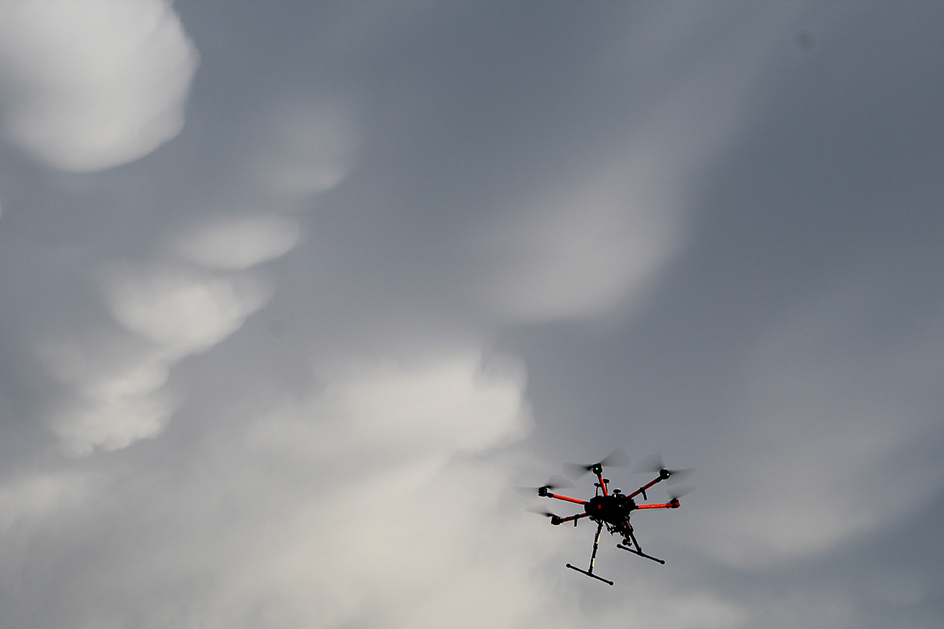
Drones

RAMS Model

tobac
Research News

Convective Environment Variability
IT led a Geophysical Research Letters paper analyzing the spatial variability of quantities such as temperature and moisture in convective environments. Near-surface variability is higher over land than over oceans, but the opposite is true for variability at 500 mb.

Cold Pools and Deforestation
Nick led a paper in Atmospheric Science Letters investigating the impacts of deforestation and cold pools on convection in the Amazon Rainforest. Deforestation creates regions devoid of rainfall, but cold pools act to reduce the size of such regions.

BioAerosols and Cold Pools
Members of the Stone, Kreidenweis, and van den Heever groups recently published key results from the BioAerosols and Convective Storms (BACS) field campaign in Environmental Science: Atmospheres. Cold pools were found to significantly increase the concentration of warm-temperature biological INPs.
Group News
2026
April 16: Tune into PBS this Wednesday night (the 22nd) for Rain Bombs, a NOVA documentary featuring the van den Heever group's field work. See this SOURCE article for information on how to view the episode.
April 11: Brenda and Christine participate in April's Breakfast Fly-In for the Wings over the Rockies Exploration of Flight museum! They showcase drones and our innovative instrumentation strategy to aviation enthusiasts of all ages and discuss how drones, radars, and targeted airplane flights help us study high-impact weather phenomena such as cold pools, convective storms, and hurricanes.


April 8: Professor Kristen Rasmussen and Brenda were featured in a 9News story describing the INCUS mission and the ground-based data collection in Northern Colorado that was part of the TIME SLICE pre-launch field campaign. They talked about the mission and new radar techniques needed for validating INCUS in front of the backdrop of the CSU CHIVO radar, a key asset for INCUS Calibration and Validation.
March 13: The CSU Walter Scott, Jr. College of Engineering makes a LinkedIn post about Sue's leadership of the INCUS mission as a part of their Women's History Month celebration.
February 26: SOURCE publishes an article about the Testing INCUS Methods Experiment — Suborbital preLaunch Investigations of Convective Evolution (TIME–SLICE) field campaigns. TIME-SLICE serves as a key part of the calibration and validation effort for the INCUS mission. The INCUS team has tested, developed, and refined observational and strategies during TIME-SLICE. These strategies will be put to use during a post-launch calibration and validation field campaign.
February 18: Andrew wins an Outstanding Student Presentation Award for his talk titled “A Source-Layer Hypothesis to Explain Updraft Strength” at the annual American Meteorological Society (AMS) meeting in Houston, TX. Using high-resolution numerical simulations of tropical convection, Andrew and his coauthors find that updrafts do not source their air evenly throughout the boundary later. This result has many implications on better understanding the thermodynamics and intensity of storms in the tropics.

January 26 - January 29: Sue, Andrew, Peter, Steve, Nick, and Phoebe all present at the annual American Meteorological Society (AMS) meeting in Houston, TX.


January 26: Check out this awesome SOURCE article all about IT's research!
2025
December 15-19: Brenda, Jennie, IT, and Rachael all present at the annual American Geophysical Union (AGU) meeting in New Orleans, LA.


November 4-7: The 2025 INCUS Science Team Meeting takes place at CSU, featuring many of the 200 scientists and engineers involved in the mission. The team spent the week discussing INCUS science and the complex algorithms involved in INCUS capturing observations of convective mass flux in storms. The department also celebrated the INCUS mission during the science team meeting with a reception and an unveiling of an incredible painting of the INCUS spacecraft by Professor Emeritus Graeme Stephens. Read more about the INCUS Science Team Meeting here.


